Website builders are genuinely good now. That needs saying upfront, because what follows will read as an argument against them otherwise, and it isn’t.
For a huge number of businesses, a builder is the correct choice and will remain the correct choice indefinitely. The question isn’t whether builders are good. It’s whether you’ve reached the specific point where the thing that made a builder valuable — it handles the hard parts for you — has quietly inverted into the thing that’s costing you.
Most businesses don’t notice when they cross that line. They just find themselves working around their own website more and more, and assume that’s normal.
The signs you’ve outgrown it
You’re spending real time on workarounds
This is the earliest and most reliable signal, and it’s easy to miss because each individual workaround is small.
You want a service page laid out slightly differently, so you fake it with an image. You need a field on a form the builder won’t add, so you ask people to type it in the message box. You want two product categories displayed differently, so you build one of them manually and update it by hand every time something changes.
None of these feel like a problem on their own. Added up over a year, they’re a part-time job you didn’t hire for. When you find yourself regularly designing around the platform instead of around your customer, the tool has stopped serving you.
The site is slow and you can’t fix it
Builders carry structural overhead — the page-building framework, the app scripts, the features you don’t use but still load. You can optimize images and remove apps, and you should. But there’s a floor you can’t get below, because you don’t control the underlying output.
If you’ve done the obvious optimizations and your site is still slow, that’s not a mistake you made. That’s the platform’s ceiling, and it matters more the more you spend on paid traffic — you’re paying for clicks and then losing a share of them to load time you can’t do anything about. (Our website speed test guide covers what you can still fix on a builder before you conclude you’ve hit that floor.)
Your monthly costs quietly became significant
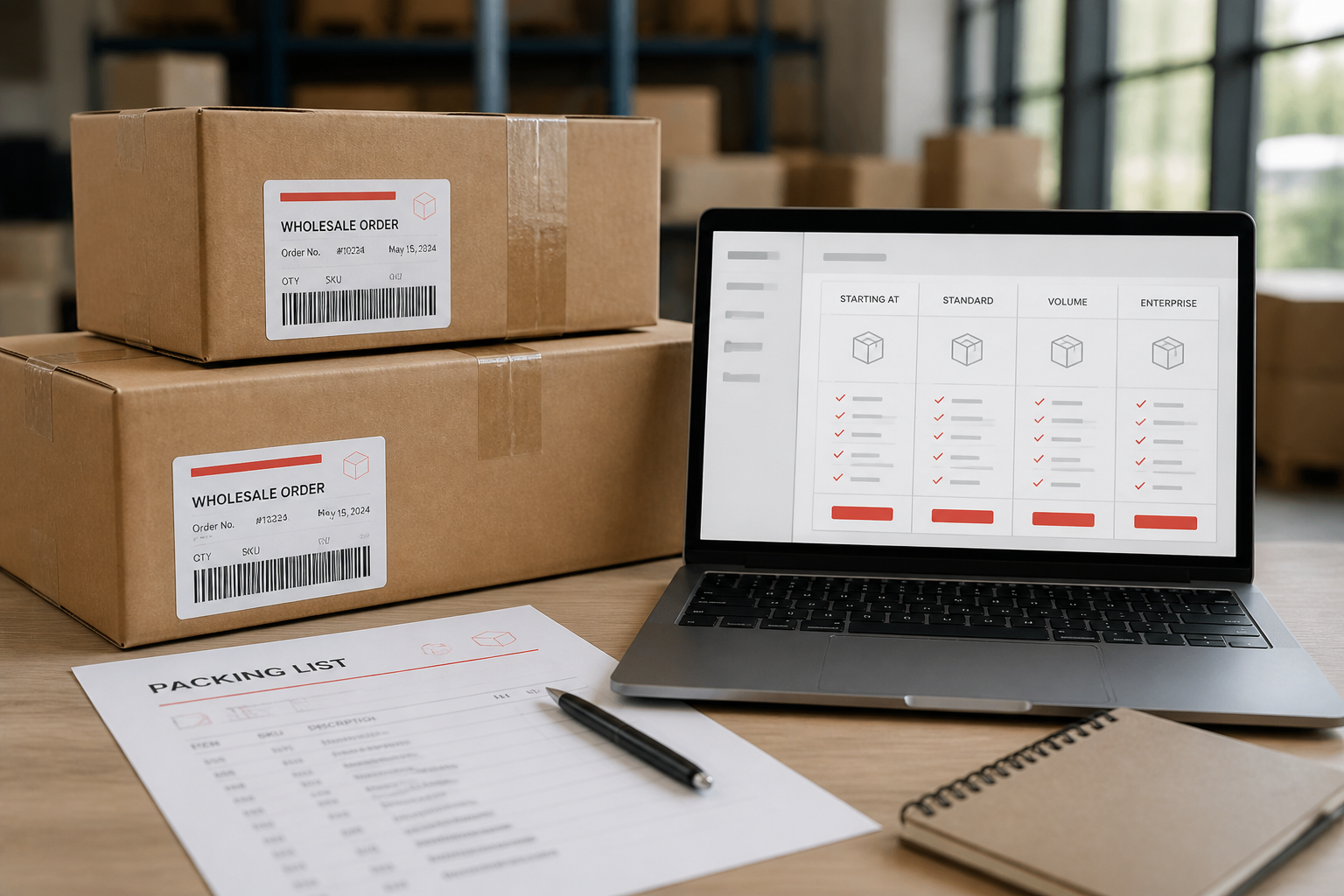
Builder pricing starts cheap. Then you add the plan tier that unlocks the feature you needed, plus a booking app, plus a form app, plus a review widget, plus the ecommerce upgrade.
Check what you actually pay annually across the platform and every add-on. For plenty of businesses it’s still excellent value. For some it’s a surprising number that would have made meaningful progress toward owning something outright — and the builder cost repeats every year forever, where a build is largely paid once. For a platform-by-platform cost picture, see Wix vs Squarespace vs custom.
You need an integration that doesn’t exist
Your inventory system, your CRM, your booking software, your accounting tool. Builders support the popular integrations well. The moment you need something specific to your industry or your own internal systems, you’re either out of luck or paying for a fragile third-party connector that breaks on updates you don’t control.
This is where a lot of businesses stall — not because the website is bad, but because it can’t talk to the rest of the business. That’s often where custom web applications enter the conversation — not as a vanity rebuild, but as the only way to connect systems a builder won’t.
The site can’t handle your content volume
Builders are built around modest content: a handful of pages, a blog, a product catalog of reasonable size. As content grows, the admin interface gets slower, bulk changes become impossible, and organizing content sensibly stops working.
If updating your site has become an ordeal because of sheer volume, that’s a structural limit, not a discipline problem.
You’ve hit an SEO ceiling you can’t move
Builders handle SEO fundamentals fine, and ranking on one is entirely possible — this is worth being clear about, because “builders are bad for SEO” is outdated advice. But there’s a level beyond the fundamentals: control over page structure and markup, custom schema, granular technical fixes, performance tuning.
If you’re in a genuinely competitive niche and you’ve done everything the platform allows while competitors keep edging ahead technically, the constraint is real.
You look like your competitors
Templates get used thousands of times. If several businesses in your market chose the same popular template — and in small niches, they often have — differentiation becomes impossible on a platform whose whole value is standardized decisions.
For businesses where being recognizable matters commercially, this alone can justify the move. (Related: when templates help and when they don’t.)
Your team is bigger than the platform assumes
Multiple people editing, different permission levels, review before publishing, a consistent component library so nobody breaks the design. Builders are designed for one or two people managing a site casually. Team workflows are where they run out of room fastest.
Signs you have not outgrown it
Equally important, and less frequently said.
You’re bored of it. Wanting a fresh look is a redesign, not a replatform. You can redesign on a builder — or treat it as a proper website redesign without changing platforms.
One feature is missing. Solve the one feature. Replatforming to solve a single gap is enormously disproportionate.
Someone told you builders are unprofessional. Usually someone who sells custom websites. Visitors don’t know or care what your site is built on — they care whether it works.
Traffic is flat. Almost always a marketing problem, not a platform problem. Moving a site nobody visits to a faster platform gets you a faster site nobody visits.
Growth is aspirational. Build for the business you have plus a reasonable horizon — not for a scale you’re hoping for. Premature replatforming is real and expensive.
What “enough” actually means
The honest test isn’t a feature list. It’s this:
Is the platform costing you more than it saves you?
A builder saves you money, time, and technical burden. Those savings are real and they don’t disappear as you grow. What changes is the other side of the ledger — workaround hours, lost conversions from speed, deals you can’t close because of a missing integration, differentiation you can’t achieve.
When the second column outweighs the first, you’ve outgrown it. Before that, you haven’t, regardless of how sophisticated your business feels.
Most businesses that replatform too early do it because the builder feels beneath them, not because it’s failing them. That’s an expensive reason.
What moving actually involves
If you have genuinely outgrown it, go in with accurate expectations.
It’s a rebuild, not a migration. Content transfers; design and functionality don’t. Assume you’re building a new site with existing content, because that’s what it is.
Protect your SEO. This is the part that goes wrong most often and hurts longest. URL structure needs mapping, redirects need planning before launch, and every page with existing rankings or backlinks needs a destination. A replatform handled carelessly can undo years of search visibility in a week.
Budget for maintenance you didn’t previously pay for. The builder was handling updates, security, and hosting invisibly. Now that’s yours — either your time or someone else’s fee. Businesses that budget for the build and forget this are the ones whose new sites quietly decay. Plan for security, backups, and ongoing care before you launch, not after something breaks.
Expect a slower pace of change. Builders make small edits trivial. After moving, some changes need a developer. Set up the CMS thoughtfully to minimize this, but it won’t be zero.
Don’t move during your busy season. Something will go wrong. Give yourself room for it to go wrong cheaply.
The middle option
It’s not binary, and this gets missed constantly.
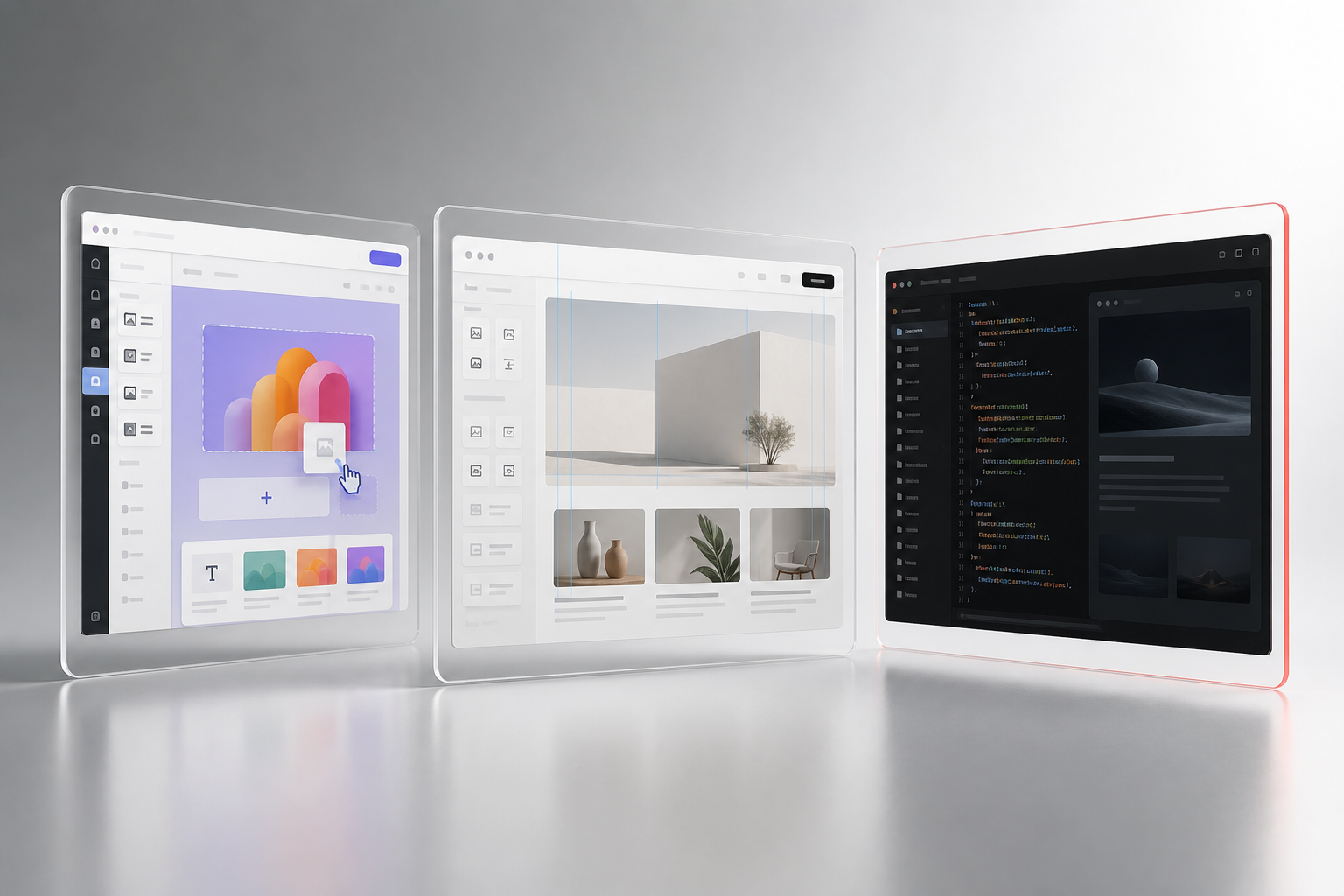
You can move to a self-hosted CMS — WordPress, for instance — which gives you far more control, real integration options, and no platform lock-in, while still being manageable without a developer for routine changes. It’s a genuine middle step between a builder and a fully custom build, and it’s the right destination for a large share of businesses that outgrow builders.
Fully custom makes sense when your site has real application logic, unusual structure, or performance requirements that a CMS can’t meet. That’s a smaller group than the number of businesses that think they’re in it.
The short version
- Builders are good; outgrowing one is about your situation changing, not the tool being bad
- The clearest signal is time lost to workarounds — small individually, significant annually
- Other real signals: unfixable speed, missing integrations, content volume, team workflow needs, competitive SEO ceilings
- Not real signals: boredom, one missing feature, flat traffic, or someone telling you builders look unprofessional
- The test is whether the platform costs you more than it saves you — before that point, stay
- If you move, it’s a rebuild: plan redirects carefully, budget for maintenance you weren’t paying before
- A self-hosted CMS is the right middle step for most businesses; fully custom is a smaller group than thinks it is
Not sure whether you’ve crossed the line, or just feel ready for something new? A website audit is the clean way to separate “the platform is failing you” from “the platform is fine — something else isn’t.”

Plenox Studio
Engineering notes from Plenox Studio on platforms, performance, and choosing builds that match the business.