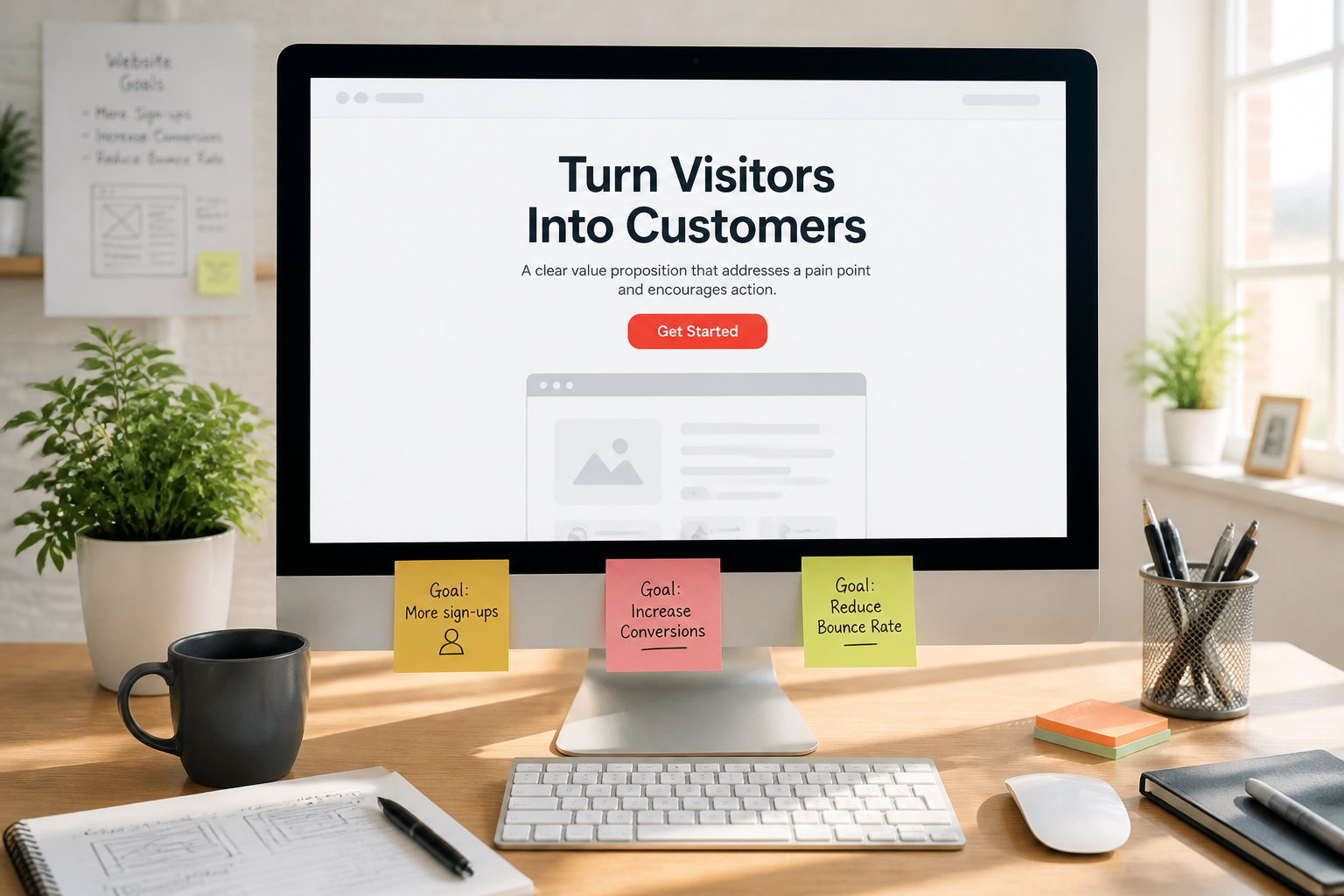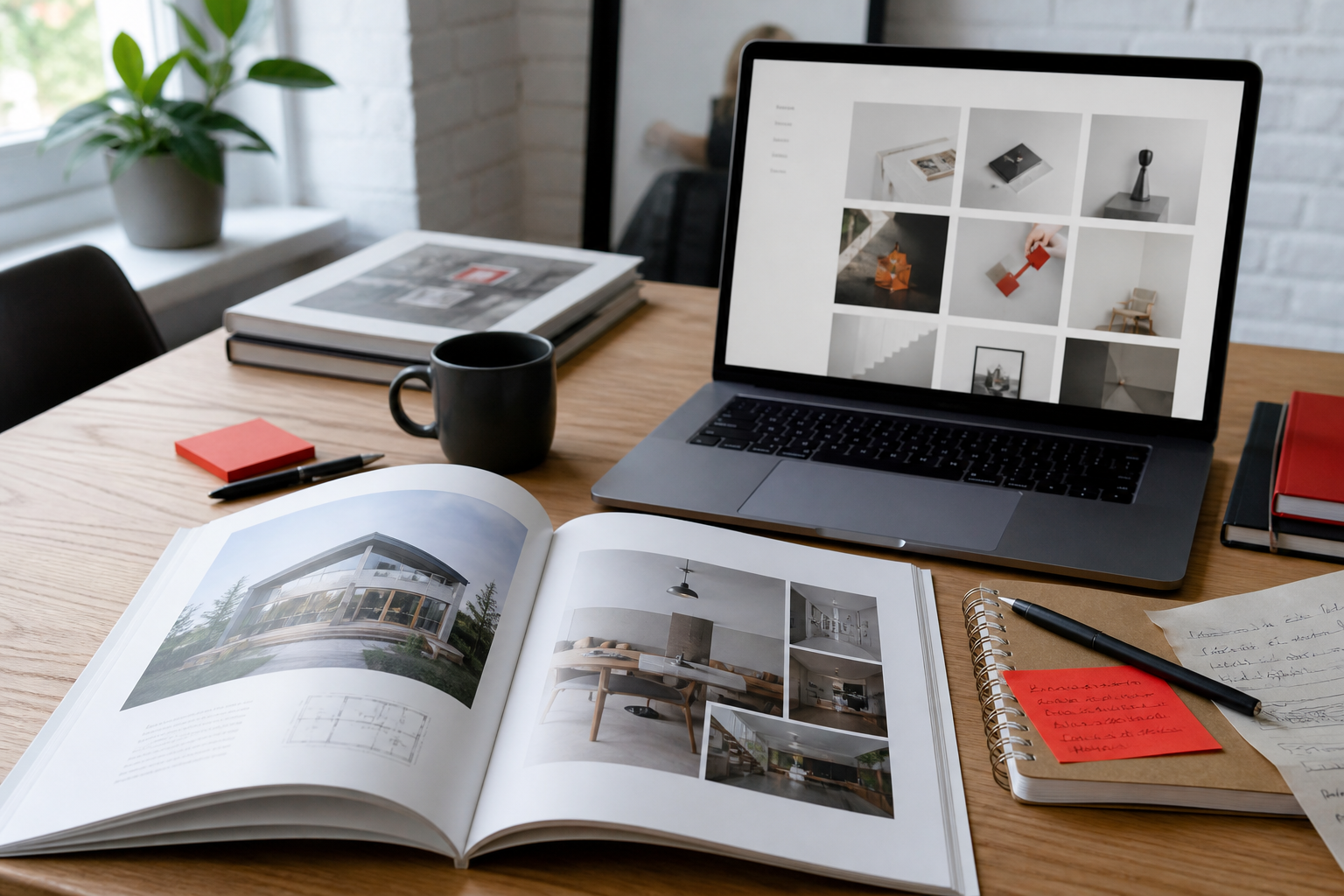
There’s a particular kind of advice you get about website templates, and it depends entirely on who’s giving it. Template marketplaces will tell you a good template is indistinguishable from custom work. Design agencies will tell you templates are a false economy that costs more in the long run. Both are selling something.
The honest answer is that templates are the right call more often than agencies admit, and the wrong call more often than marketplaces admit. What follows is how to tell which situation you’re in — plus the same question applied to brand guideline templates, which have their own set of trade-offs.
What you’re actually buying
A website template is a pre-built design and layout structure you populate with your own content. Somebody else made the structural and visual decisions; you’re renting them.
That’s the real transaction, and it’s worth stating plainly because it explains both the upside and the downside. You’re saving the cost of decisions — layout, hierarchy, typography, spacing — that someone with skill already made. You’re also inheriting decisions made for a hypothetical business that isn’t yours.
The trade is speed and cost against fit and distinctiveness. Whether that trade is good depends almost entirely on your situation, not on templates as a category.
When a template is the right call
You need to be online quickly
If the cost of not having a website right now exceeds the cost of having a merely adequate one, ship the template. A live template site earning business today beats a perfect custom site three months from now — and this is more common than most design advice admits. New businesses, event sites, and anything with a deadline attached usually fall here.
Your budget genuinely doesn’t stretch to custom
Not “we’d prefer to spend less,” but actually doesn’t stretch. A well-chosen template that gets customized properly beats a cheap custom build from whoever quoted lowest — the floor on template quality is much higher than the floor on budget custom work.
Your needs are genuinely standard
Some businesses really do need what thousands of other businesses need: home, about, services, contact, maybe a blog. If nothing about your business requires an unusual structure, you’re paying a premium to have someone rebuild a solved problem.
You’re validating an idea
Pre-launch, pre-revenue, testing whether anyone wants this at all — a custom site is premature optimization. Spend the money once you know the business works.
The site isn’t a primary sales channel
If customers find you through referrals, a marketplace, or a physical location, and the website mostly exists so people can confirm you’re real and find your phone number, it doesn’t need to be remarkable. It needs to load, work on mobile, and not look neglected.
When a template will cost you
Your website is the business
E-commerce, SaaS, anything where the site is where the transaction happens rather than where it’s advertised. Here, small conversion differences compound directly into revenue, and a template optimized for “a generic store” instead of your specific funnel is leaving money behind every single day.
You’re selling design, or selling to design-literate buyers
If you’re a design studio, a creative agency, a photographer, or an architect, a template undercuts your credibility in a way it wouldn’t for a plumber. Your audience recognizes the templates. Worse, they’ll assume the work you deliver is comparably off-the-shelf.
You need something structurally unusual
Templates handle standard page types well. The moment you need a booking flow with unusual rules, a product configurator, a member area, or a content structure that doesn’t match blog-or-shop, you’ll spend more fighting the template than you’d have spent building the thing properly. This is where template projects quietly become custom projects with extra steps.
You’re in a crowded, visually competitive category
If your top ten competitors all bought from the same template marketplace, you look like the eleventh. Differentiation is one of the few advantages a smaller business genuinely has over a larger one, and a template spends it.
You already know you’re growing into custom
Buying a template you’ll replace in eighteen months means paying for two websites and one migration. If the custom build is inevitable and reasonably close, going straight there is often cheaper in total.
The costs nobody mentions upfront
Customization time. Making a template genuinely fit your brand — not just swapping the logo — takes real hours. Businesses routinely spend more on customization than the template cost, without having budgeted for it.
Fighting the structure. Every template has assumptions baked in. Your content will disagree with some of them. Working around that is the single biggest source of surprise cost in template projects.
Bloat. Many templates ship with far more than you need — features, scripts, and stylesheets for use cases you’ll never touch. That’s dead weight on every page load for every visitor. Worth checking against a speed test before you commit.
Update dependency. Your site’s foundation is maintained by someone else. If they stop maintaining it, you have a security and compatibility problem on a timeline you don’t control.
The rebuild. If you outgrow it, you’re not editing — you’re starting over.
The middle path most people miss
The choice isn’t binary, and this is where a lot of businesses land most sensibly.
Template plus real customization. Start from a well-built template, then have a designer meaningfully rework it — typography, color, spacing, component styling — until it stops reading as a template. Costs a fraction of full custom, gets you most of the distinctiveness.
Custom design, template-informed structure. Have the design done properly, but don’t reinvent standard page structures. Nobody needs a novel approach to a contact page.
Template now, custom at a defined trigger. Ship the template deliberately, with an explicit condition for replacing it — a revenue threshold, a headcount, a funding round. The failure mode is drifting for years on a placeholder because no one set a trigger.
Custom design system, then scale it yourself. Pay once for a proper design system and component library, then build additional pages internally against it. Higher upfront cost, much lower marginal cost per page — sensible if you’ll be adding pages continuously.
Choosing a template well, if you’re going that route
Most bad template outcomes trace back to choosing badly rather than to templates as a concept.
Look at it on your phone first. Templates are marketed with desktop screenshots. Most of your traffic isn’t desktop.
Check it with realistic content volumes. Demos are populated with content that fits perfectly. Your service descriptions are longer, your product names are more awkward, and your team photos aren’t all shot in the same studio. Templates break in exactly these places.
Check when it was last updated. An abandoned template is a liability, not a bargain.
Test the demo’s speed. If the demo is slow, yours will be slower — you’ll add content and images to what you’re seeing.
Confirm what “customizable” actually covers. Sometimes it means genuine control over layout and styling. Sometimes it means you can change the accent color.
Read reviews for support quality, not aesthetics. You’ll care about support when something breaks, and the reviews mentioning it are the ones that matter.
A note on brand guideline templates
The same question comes up for brand guidelines, and the answer differs in an important way.
A brand guidelines template — a pre-structured document for logo usage, color, typography, and voice — is far less risky than a website template, because nobody outside your organization sees the document. It’s an internal reference. Nobody is judging your business by your style guide’s layout, which removes the entire distinctiveness objection.
Use a template for your brand guidelines when: you have brand decisions already made and just need them documented consistently. The structure of a good guidelines document is genuinely standardized — logo do’s and don’ts, clear space rules, color codes, type hierarchy — and there’s no advantage to inventing your own format.
Don’t rely on a template when: you don’t actually have the underlying brand decisions yet. This is the real trap. A guidelines template gives you a document with blanks, and filling in blanks feels like doing brand work while skipping the part that mattered — deciding what the brand actually is and why. A beautifully formatted style guide documenting arbitrary choices is worse than no guide at all, because it makes the arbitrary choices look considered and locks them in.
Put another way: templates are fine for recording brand decisions and useless for making them. If you’re not sure whether your brand decisions are sound, that’s a brand identity question, not a document formatting one.
The question to actually ask
Not “are templates good or bad” — that has no answer. Ask this instead:
How much of my business’s success depends on this website being better than adequate?
If the honest answer is “quite a lot,” custom is likely worth it. If it’s “the site mostly needs to exist, work, and not embarrass us,” a well-chosen and properly customized template is a perfectly sound decision, and anyone telling you otherwise probably sells custom websites.
Most businesses are somewhere in between, which is why the middle-path options above are where most of them should land.
The short version
- Templates are right when speed or budget genuinely constrains you, your needs are standard, or the site isn’t your main sales channel
- They cost you when the website is the business, when you’re selling to design-literate buyers, when you need unusual structure, or when your competitors all look the same already
- Budget for customization time — it’s the cost that consistently gets underestimated
- The middle path (template plus real customization, or custom design with standard structure) fits most businesses better than either extreme
- Brand guideline templates carry far less risk than website templates, but only if you’ve actually made the brand decisions first
Plenox Studio
Design notes from Plenox Studio on craft, conversion, and redesigns that hold up after launch.