The standard answer is yes, obviously, every business needs a website, it’s not the nineties anymore.
That answer is given almost exclusively by people who sell websites, which is worth keeping in mind — including here. The more useful answer is that some businesses genuinely need one, some genuinely don’t, and a fair number need something much smaller and cheaper than a website that they’d get more value from first.
Here’s how to work out which you are.
Start here: you might only need a Google Business Profile
Before anything else, because this is the answer for more businesses than the industry likes to admit.
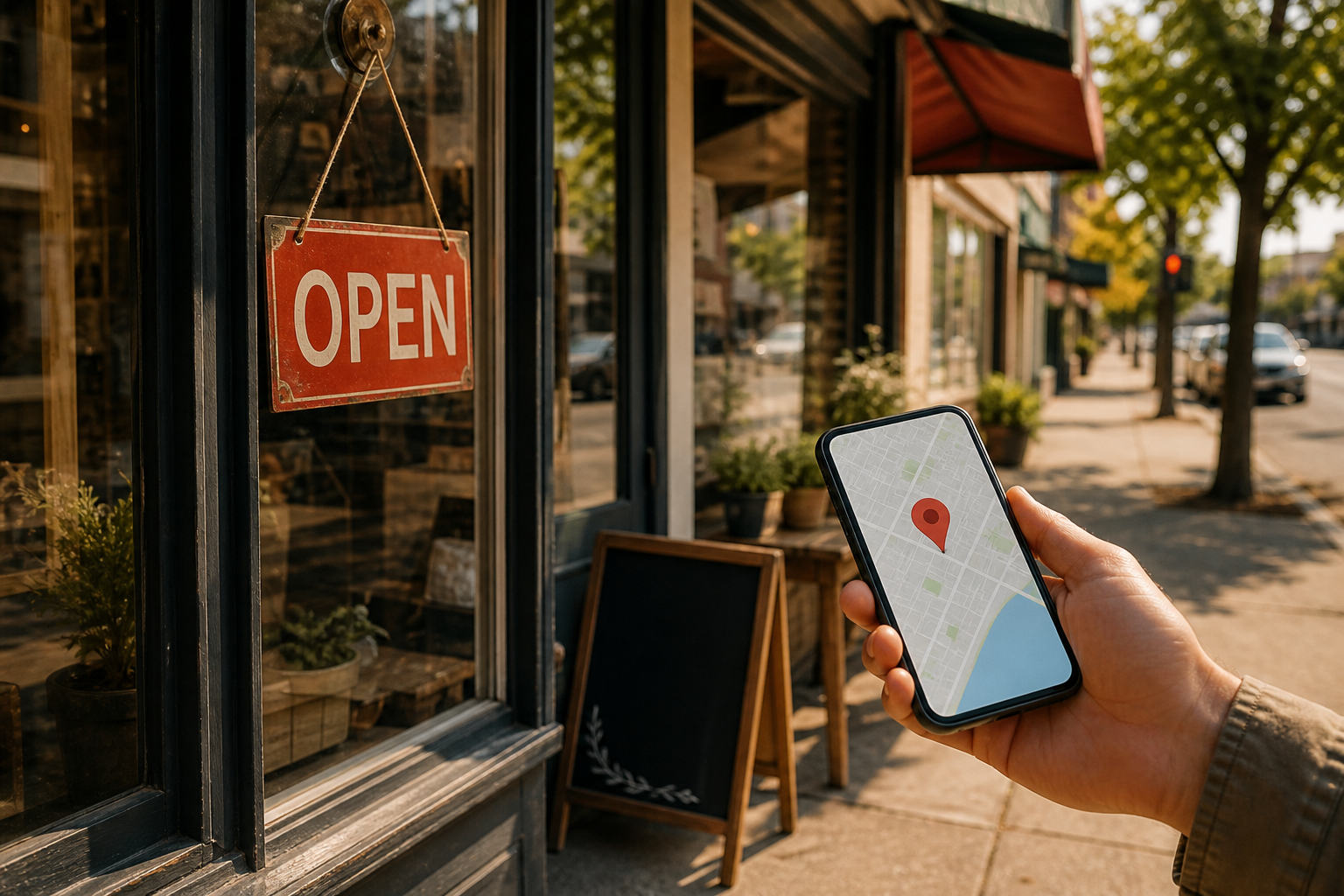
A Google Business Profile is the free listing that shows up in Google Maps and in the box on the right of search results — your name, hours, phone number, photos, reviews, and directions. It costs nothing. It takes an afternoon to set up properly.
For a genuinely local, service-based business where customers find you by searching “[your trade] near me” and then call — a mobile hairdresser, a local handyman, a small food stall — a well-maintained Google Business Profile with real photos and real reviews does most of what a basic website would do, and it does it in the place people are actually looking.
Set this up first regardless. Even if you eventually build a website, the profile is free, it ranks, and it drives calls. Building a website while ignoring your Google listing is doing the expensive thing before the free thing. If local search is your main channel, local SEO is the discipline that keeps that listing working.
When the profile alone is enough:
- You serve one local area
- Customers need your hours, location, phone number, and a sense that you’re real
- You don’t need to explain anything complicated
- You’re not competing on credibility with larger, more established competitors
When it isn’t enough: everything below.
You probably do need a website if…
People need to understand something before contacting you
If your service takes explaining — what you actually do, how the process works, what’s included, who it’s for — a listing can’t carry that. Anything consultative, technical, or unfamiliar to your customers needs somewhere to explain itself.
The purchase is significant
Nobody researches a coffee. People absolutely research a roofer, a solicitor, a wedding photographer, or anyone they’re about to hand several thousand of anything to. Higher-consideration purchases mean people will look you up, and what they find (or don’t) affects whether they call.
You’re competing against businesses that have one
This is about relative credibility, not absolute necessity. If your three closest competitors have proper websites and you have a Facebook page, you look like the smaller, less established option — whether or not that’s true. In a market where everyone’s equally unlisted, this doesn’t apply.
You sell online, or want to
Obvious, but worth stating: if the transaction happens digitally, you need somewhere for it to happen. That’s ecommerce territory, not a brochure page with a phone number.
You want customers who don’t already know you
This is the real one, and it’s what most “do I need a website” questions are actually about underneath.
If your business runs on referrals and repeat customers, and you’re happy with that volume, a website changes less than people assume. If you want to be found by people who’ve never heard of you, you need something you own that can rank in search, and a profile alone won’t do it once you’re beyond simple local queries.
You need to be credible to a specific audience
B2B buyers, corporate clients, grant funders, partners. Certain audiences will simply check, and “no website” reads as either very new or not serious.
You’re spending on advertising
If you’re paying for clicks, they have to go somewhere you control and can optimize. Sending paid traffic to a social profile wastes most of what you’re paying for — and often points at a landing page rather than a full site.
You might genuinely not need one if…
The honest other side.
You’re fully booked from referrals and want to stay that size
If you turn work away already, a website solves a problem you don’t have. Some businesses are deliberately at capacity, and that’s a legitimate position, not a lack of ambition.
You sell entirely through a platform that works
Etsy, Amazon, a food delivery app, a marketplace. If the platform brings you customers and handles the transaction, a separate website is a second thing to maintain for uncertain benefit. There’s a real argument about platform dependence — the platform owns your customers and can change terms — but that’s a strategic risk decision, not a straightforward “you need a website.”
Your customers genuinely aren’t searching online
Rare, and often wrong when people assume it, but real in some trade and B2B contexts where relationships and word of mouth do all the work.
You’re testing whether the business works at all
Pre-revenue, still figuring out what you’re selling and to whom. Spend the money on finding out whether anyone wants this. A website for a business that changes shape three times in six months is money spent on something you’ll throw away.
You won’t maintain it
A visibly abandoned website — 2021 copyright, outdated prices, a phone number you no longer use — is actively worse than no website. It signals a business that may have closed. If you’re honest that nobody will update it, don’t build it.
What “a website” can actually mean
Part of why this question feels heavy is that people imagine one thing. There are several, at wildly different costs.
A single page. Who you are, what you do, how to contact you. Genuinely enough for a lot of small service businesses. Cheap, fast, hard to neglect because there’s almost nothing to update.
A small site. Home, about, services, contact — four or five pages. The standard small business site, and the right answer for most. See website design for small business for what that usually includes.
A full site with content. The above plus a blog or resource section, built to attract search traffic over time. Only worth it if you’ll actually publish consistently.
An ecommerce store. Different category, different cost, different maintenance commitment.
If the question feels like “should I spend several thousand,” the answer may be no. If it’s “should I spend a few hundred on a single page that explains what I do and has a contact form,” that’s a much easier yes for most businesses. For the real ranges behind those numbers, see how much a website costs in 2026.
What a website does that social media can’t
Common objection: “I have Instagram and Facebook, isn’t that enough?”
Sometimes yes. But three real differences:
You own it. Platforms change algorithms, suspend accounts, and lose reach. A profile you don’t control is not an asset, it’s a tenancy.
It ranks in search. Social profiles rank for your business name. A website can rank for what you actually do — which is how people who’ve never heard of you find you.
It’s structured for deciding, not browsing. Social feeds are chronological and shallow. Somebody choosing a contractor needs to find your services, understand your process, and see how to get in touch, and social platforms are poor at that by design.
Social plus a Google Business Profile is a legitimate setup for a small local business. It’s a weaker one for anything that needs explaining or competes beyond one neighborhood.
The test
Two questions, answered honestly.
1. When someone hears about my business and looks me up, what do they find — and is that good enough?
Search your business name right now. Look at what comes up as a stranger would. If what’s there is thin, outdated, or belongs to somebody else, that’s the actual problem to solve, and it may or may not require a full website.
2. Do I want customers who don’t already know me?
If no, a website matters much less than everyone insists. If yes, you need something you own that can be found.
If the answer is yes, start smaller than you think
The most common mistake isn’t skipping the website. It’s building far more than the business needs and then never updating it.
Start with one page or a small site that says clearly what you do, who it’s for, and how to get in touch. Get it live. See what people actually ask you and what they can’t find. Then expand based on that, rather than on a sitemap drawn up before anyone had visited.
A small site that’s current beats a large site that’s abandoned, every time.
The short version
- Set up a free Google Business Profile first, whatever else you decide — it’s free, it ranks, and it drives calls
- For a simple local service business, that profile plus social may genuinely be enough
- You need a real website when your service needs explaining, the purchase is significant, competitors have one, you sell online, or you want customers who don’t already know you
- You may not need one if you’re at capacity on referrals, selling through a platform that works, still validating the idea, or honest that you won’t maintain it
- “A website” ranges from a single page to a full store — the answer to “should I” often changes once you narrow which one
- An abandoned website is worse than none at all
- Start smaller than feels right, get it live, expand based on what people actually ask
Still unsure whether you need a site, a landing page, or just a better Google listing? A short consulting conversation is often enough to settle that before you spend money on the wrong thing.
Plenox Studio
Practical notes from Plenox Studio on hiring decisions, scope, and builds that match how the business actually works.